
"An amazing achievement: Deepminds protein folding prediction
As a measure of how vastly information technology, computational methods, big data, and machine learning are transforming research practice, I invite readers to consider the following amazing achievement. DeepMinds, an AI-focused subsidiary of Google (Alphabet), has been developing an extremely accurate program to predict protein folding configurations, a notoriously difficult computational problem. Today they released a database that essentially captured their predictions for almost all known human proteins (about 350,000 of them) plus similar data for a number of other highly studied reference organisms such as the e. coli bacterium. The database, as I understand it, is fully public access, which is wonderful.
This is a major game changer and the implications are hard to fully predict, but I expect they will be striking. They summarized this work in a paper (preprint) in Nature. See

Highly accurate protein structure prediction for the human proteome | Nature
AlphaFold is used to predict the structures of almost all of the proteins in the human proteome—the availability of high-confidence predicted structures could enable new avenues of investigation from a structural perspective.
I expect there will be a flurry of media coverage over the next few days. Here are a couple of good early pieces to provide some context:
DeepMind puts the entire human proteome online, as folded by AlphaFold | TechCrunch
DeepMind and several research partners have released a database containing the 3D structures of nearly every protein in the human body, as computationally
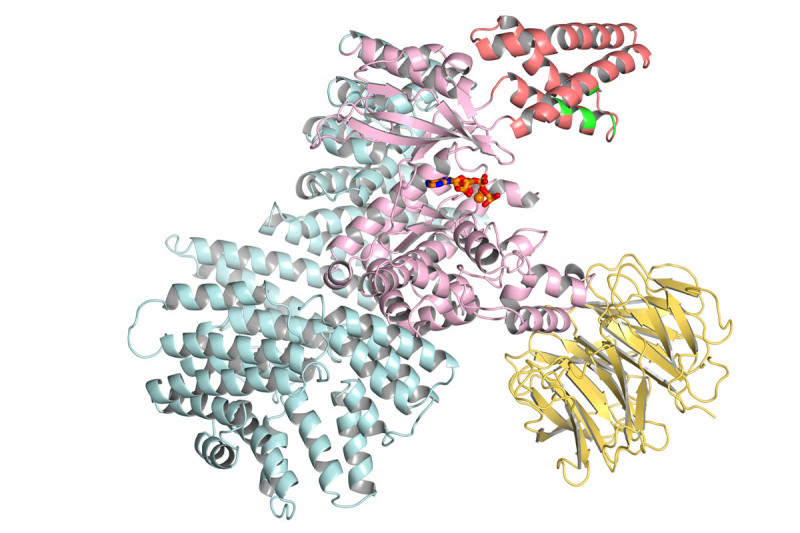
Google turns AlphaFold loose on the entire human genome - Ars Technica
The AI-driven structural predictions are being shared through a public database.
Clifford Lynch Director, CNI


